
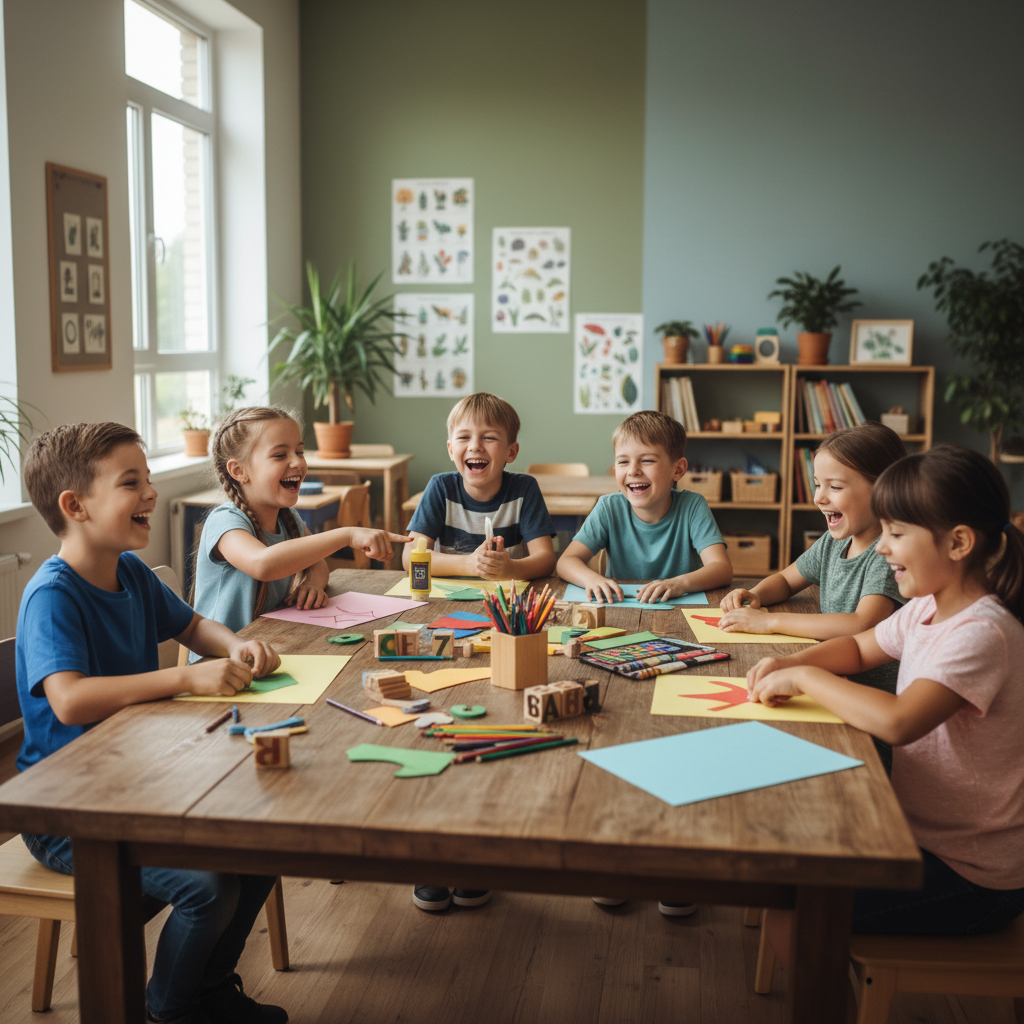
Cooperative learning opens up entirely new ways of learning together. It strengthens community, fosters personal development, and ensures that every child is included with their individual strengths. Discover how you can introduce your child or class to true teamwork and benefit from scientifically proven methods!
Achieving Goals Through Cooperation: What is Behind Cooperative Learning?
Definition: What is Cooperative Learning?
Cooperative learning describes learning methods in which several people work together on a task, communicate with each other, and learn from one another. Unlike mere group work, deliberate structuring creates genuine exchange: everyone supports each other, discussions are encouraged, and knowledge is developed collaboratively.
Distinction from Group Work, Partner Work, and Collaboration
In group work, several children work on a topic – though not always truly together. Cooperative learning, on the other hand, demands genuine participation from everyone, clear goals, and roles. Partner work is the smallest variant, while collaboration implies more demanding commonality, for example, in complex projects.
Historical Development and Current Importance in Teaching
The roots of cooperative learning go back to educators like John Dewey and Maria Montessori. Today, teamwork and social skills are gaining increasing importance in daycare centers and schools: education should equip children with skills for positive interaction, not just pure factual knowledge.
The Five Pillars of Cooperative Learning
- Positive Interdependence: Everyone is needed; only together can the group achieve its goal.
- Individual Accountability and Group Responsibility: Everyone contributes to the result – all benefit from the contributions of others.
- Direct Promotive Interaction: Exchange and mutual support are at the core.
- Strengthening Social and Communication Skills: Listening, discussing, and arguing are practiced playfully.
- Reflection and Evaluation of the Learning Process: What went well? What can we do better? Reflection is always part of it.
How Does Cooperative Learning Work in School Practice?
Typical Flow of Cooperative Learning Phases
A cooperative learning process often follows clear steps:
- Introduction to the topic (common question, problem statement)
- Group formation and role allocation
- Task processing in small groups, active discussion
- Presentation of results to the group
- Reflection: What have we learned?
Methods and Proven Examples: Think – Pair – Share, Learning by Teaching, Jigsaw & More
- Think – Pair – Share: Everyone first thinks individually, then discusses with a partner, and finally presents the results to the group.
- Learning by Teaching: Children prepare topics and convey them to others.
- Jigsaw Method: Each small group works on one aspect, and the results are then put together – like puzzle pieces.
Role of the Teacher: Moderator, Impetus Provider, and Supporter
In a cooperative setting, the teacher is less a disseminator of knowledge and more a supporter and coach. They guide the groups, foster fair discussions, and help resolve conflicts that arise.
Designing Learning-Promoting Group Processes
Well-mixed teams, alternating roles, and clear goals ensure dynamism. Rituals such as common starting questions, feedback rounds, or a shared group goal provide additional motivation.
Scientific Findings and Effectiveness: What Does Cooperative Learning Really Achieve?
Overview of Scientific Studies and Their Results
Empirical studies show: children learn demonstrably more effectively and with more joy through cooperation. Especially social skills, but also factual knowledge, benefit sustainably. The OECD and PISA studies emphasize the importance of collaborative learning for future educational success (see e.g., OECD-PISA Report).
PISA, OECD, and Empirical Findings on Learning Effectiveness
In addition to higher learning outcomes, researchers report increased motivation, more self-confidence, and a more open error culture among children. These effects occur not only in the short term but over many years.
Advantages: Learning Success, Social Competence & Motivation
- Better grades and deeper understanding of content
- More enjoyment of learning and increased intrinsic motivation
- Stronger social bonds within the group
Long-term Impact on Educational Success
Formerly shy children often thrive particularly well in cooperative settings because they can participate without fear. The ability to solve problems together often remains throughout life.
Opportunities, Challenges, and Potential Pitfalls
Typical Problems and Obstacles in Everyday Life
Cooperative learning does not always run smoothly. Common pitfalls include imbalances in participation, communication problems, or group conflicts.
Proven Solutions & Tips for Sustainable Success
- Constantly mix up new groups
- Define clear rules and goals
- Integrate reflection times firmly into the process
- Appreciate performance individually and as a team
Promoting Individual Participation and Motivation
Assign roles consciously and support even reserved children. Give targeted praise for both individual contributions and team performance!
Cooperative Learning in the Digital Age
Digital Tools and Platforms for Successful Collaboration
Digital offerings, used correctly, can enrich cooperative learning – from online whiteboards to forums and secure learning platforms. It is important, however: technology should never replace the shared experience, but sensibly complement it.
Synchronous vs. Asynchronous Digital Methods
While synchronous learning forms (e.g., video chat) enable direct interaction, asynchronous methods (e.g., digital bulletin boards) allow for more flexible work. Both can be combined for cooperative processes.
Best Practices: Online Group Work and Hybrid Scenarios
- Short virtual meetings to clarify tasks
- Use digital exchange platforms (chat, cloud, boards)
- Schedule fixed feedback times and virtual presentations
Ohrlaf: Screen-free play & learn

For many families, it's a challenge to integrate screen-free cooperative learning experiences into everyday life. This is where Ohrlaf – screen-free play & learn comes in: This interactive learning toy promotes active listening, imagination, and teamwork in children aged 3 to 8 – all without an app or tablet. Ohrlaf is based on pedagogical principles and grows with your family's needs. This way, collaborative, creative learning becomes not only child's play but also a real experience.
Practical Tips for Teachers, Students, and Parents
Success Factors for Successful Cooperative Learning in the Classroom and at Home
- Clear task assignments and role distribution
- Regular reflection ("How was working in the group?")
- Choose age-appropriate methods – the younger the children, the more playful
- Provide targeted and appreciative feedback
Checklist: How to Get Started with Group Work
- The task is understandable for everyone
- Groups are diverse
- Every child gets a role (e.g., timekeeper, note-taker, presenter)
- The common goal is clearly formulated
- Plan breaks and exchange times
Practical Examples and Suggestions for Different Age Groups
- For Preschool/Kindergarten: Guessing sounds in small groups, finding rhymes together
- Primary School: Learning games like "Jigsaw," preparing short presentations in teams
- At Home: Shared audio stories with discussion rounds, playing Memory together
How You Benefit from Cooperative Learning – In the Classroom and Beyond!
The Most Important Advantages at a Glance – For You and Your Group
- You discover how strong we can be through teamwork
- Children learn to support each other and act responsibly
- Learning is more fun and stays in memory longer
Sustainable Effects on Creativity, Critical Thinking, and Social Development
Those who work cooperatively early on develop creative problem-solving strategies and sustainably strengthen their self-confidence. Not only in class but also in everyday life, you are well equipped with these skills.
Further Resources, Materials, and Literature
- Books and websites such as "Cooperative Learning in Primary School" by Norm Green & Co.
- Position Paper "Cooperative Learning" (DPHV)
- Method Kit on Lehrer-Online, State Institute for School Development Baden-Württemberg
- Ohrlaf Blog on educational toys and parent guides
Conclusion: Learning Together—Growing Together!
Cooperative learning provides children with fundamental skills that extend far beyond the classroom. Whether in the classroom, at home, or during play – it pays to focus on togetherness and teamwork. Start today, set small impulses, and observe step by step how small shared successes turn into great learning experiences!
FAQ
What is cooperative learning?
Cooperative learning is a teaching method in which children or young people work together on tasks, exchange ideas, and benefit from each other. The goal: knowledge is acquired together, not in isolation.
What are the advantages over traditional group work?
In contrast to traditional group work, cooperative learning ensures that everyone is actively involved, takes responsibility, and the learning success is consciously reflected upon together.
How can parents promote cooperative learning at home?
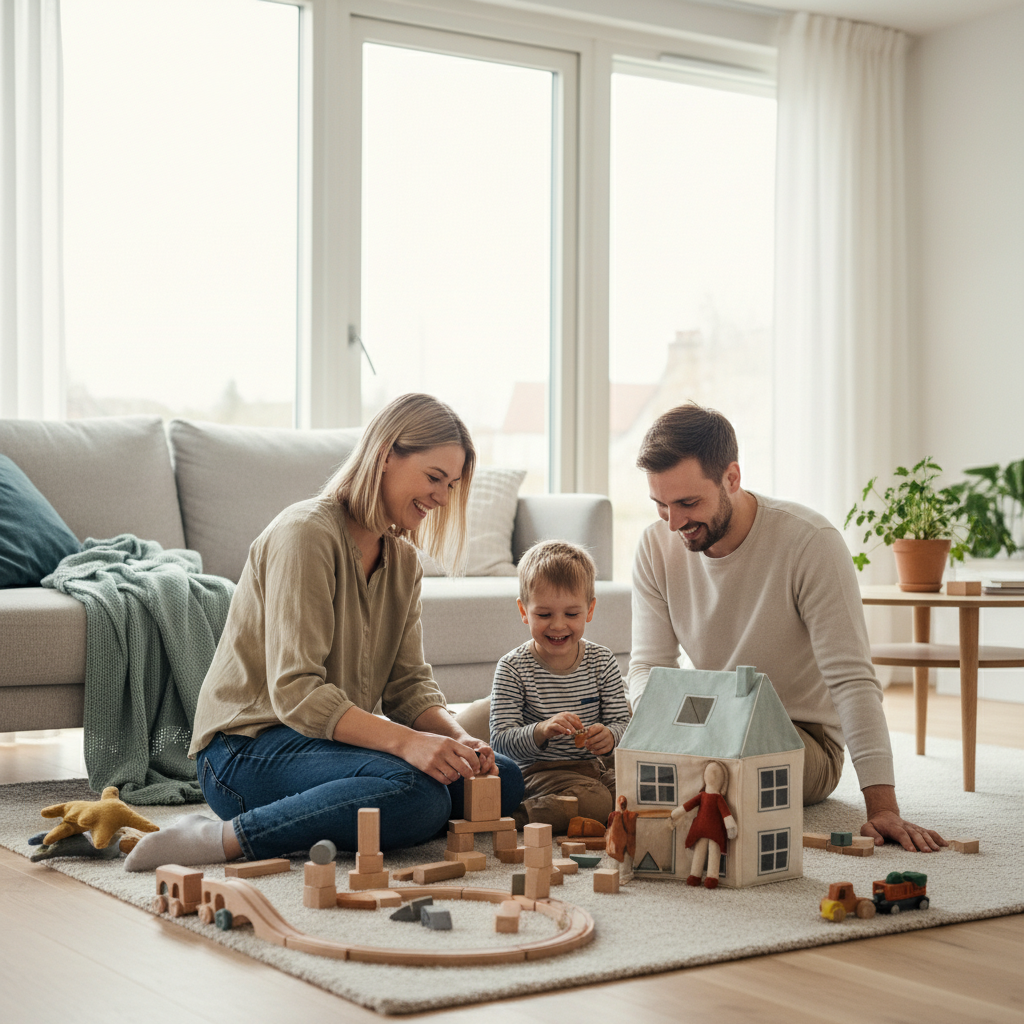
Parents can, for example, listen to audio plays with their children, play learning games, or incorporate group tasks into everyday life. Genuine togetherness and regular reflective discussions are important.
What mistakes should be avoided in cooperative learning?
Typical mistakes include unclear tasks, missing roles, and unequal participation. Clear structure, changing roles, and regular feedback provide remedies.
For which age groups is cooperative learning suitable?
Cooperative learning is suitable for children from kindergarten age up to high school. Methods and tasks are adapted to be age-appropriate.


Leave a comment
This site is protected by hCaptcha and the hCaptcha Privacy Policy and Terms of Service apply.