
In a world full of tablets, smartphones, and streaming platforms, it is more important than ever to also give children space for screen-free experiences. Studies show that children aged three and older spend, on average, more than two hours a day in front of a screen – with potentially negative consequences for concentration, sleep, and social development BMJ Open, BLIKK Study.
However: Screens are not fundamentally bad. They can promote media literacy – but the right amount at the right time is crucial. Especially for children under 6, professional organizations recommend a more conscious approach to digital media.
Ohrlaf – Interactive Learning Without a Screen
This is exactly where Ohrlaf comes in. As an interactive learning companion without a screen, Ohrlaf combines the best of two worlds:
-
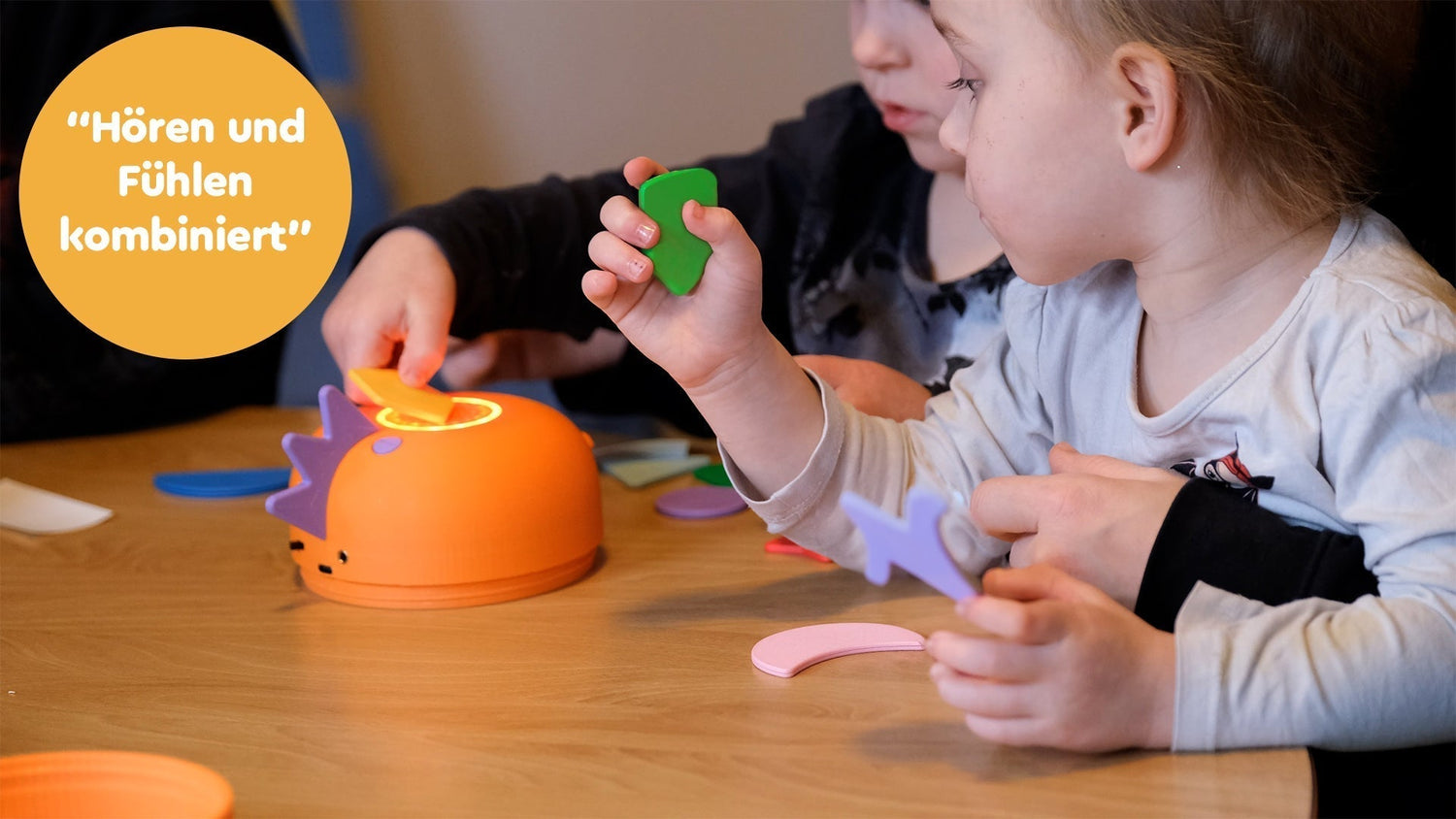
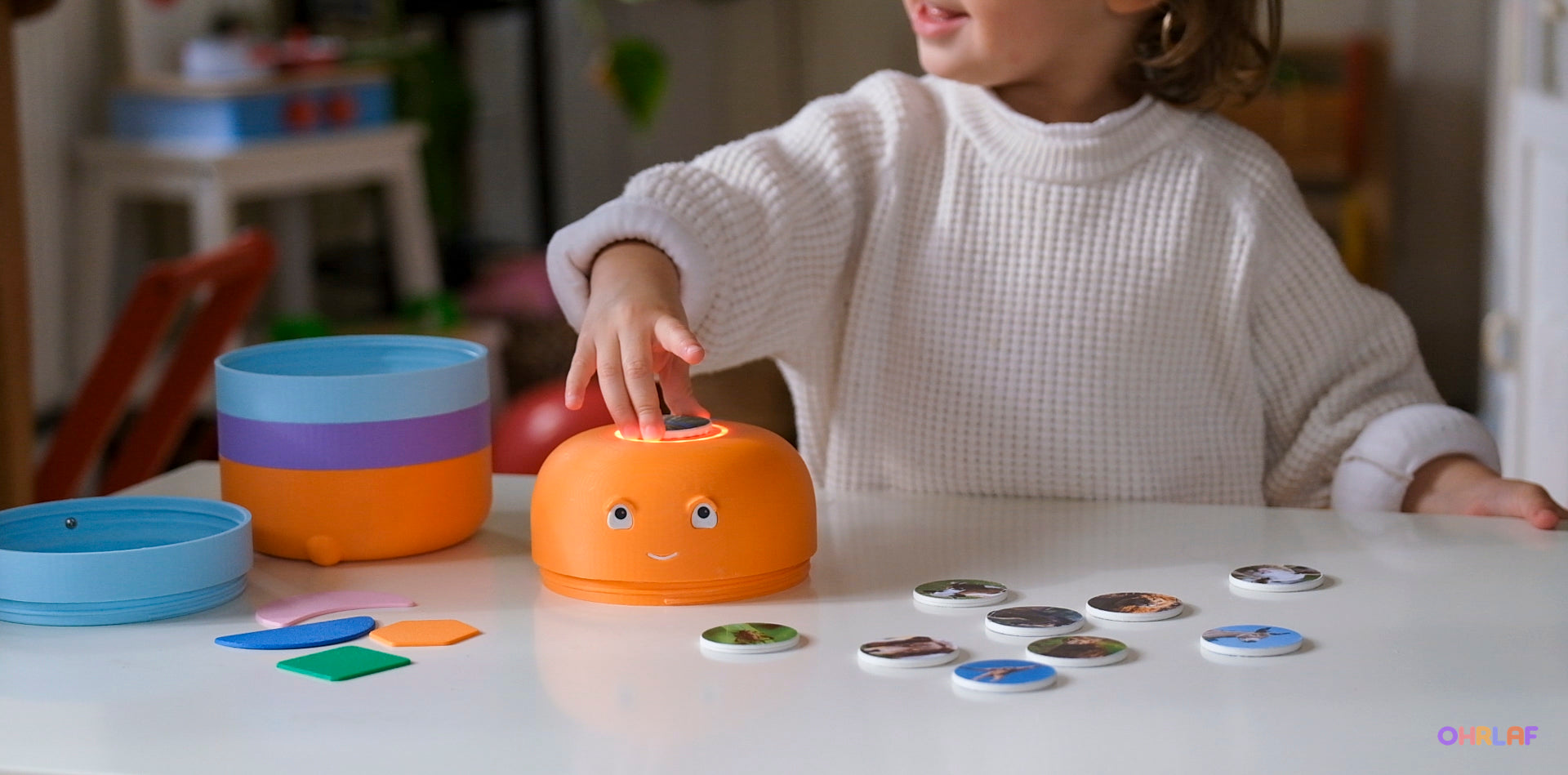
Creativity through play: Children choose a theme card, place it on the Ohrlaf box, and dive directly into a sound-based world of experience – from exciting adventure stories and sound riddles to small knowledge games.
-
Multi-sensory learning: By listening, understanding, and actively participating with physical chips and tasks, various senses are engaged. This promotes not only cognitive but also fine motor skills.
-
Media literacy without screen time: With Ohrlaf, children learn to process information audibly, concentrate, and solve tasks independently – skills that will also empower them in the digital world later on.
What do the studies say?
-
Multi-sensory learning improves memory and problem-solving skills in children (Shams & Seitz, 2008).
-
Audio-based learning can significantly enhance language comprehension and auditory perception in preschool children (British Journal of Educational Psychology, 2014).
-
Free, creative play fosters self-efficacy, imagination, and socio-emotional development – especially when it is not overwhelmed by visual stimuli (American Academy of Pediatrics, 2016).
Conclusion: Screen-free time is a gift – not a sacrifice
With Ohrlaf, children can learn, discover, and be creative in a playful and self-directed way – entirely without a screen, but with great added value. Parents can relax: media literacy doesn't just develop on a tablet, but also in real life – through listening, participating, and imagination.

Leave a comment
This site is protected by hCaptcha and the hCaptcha Privacy Policy and Terms of Service apply.