
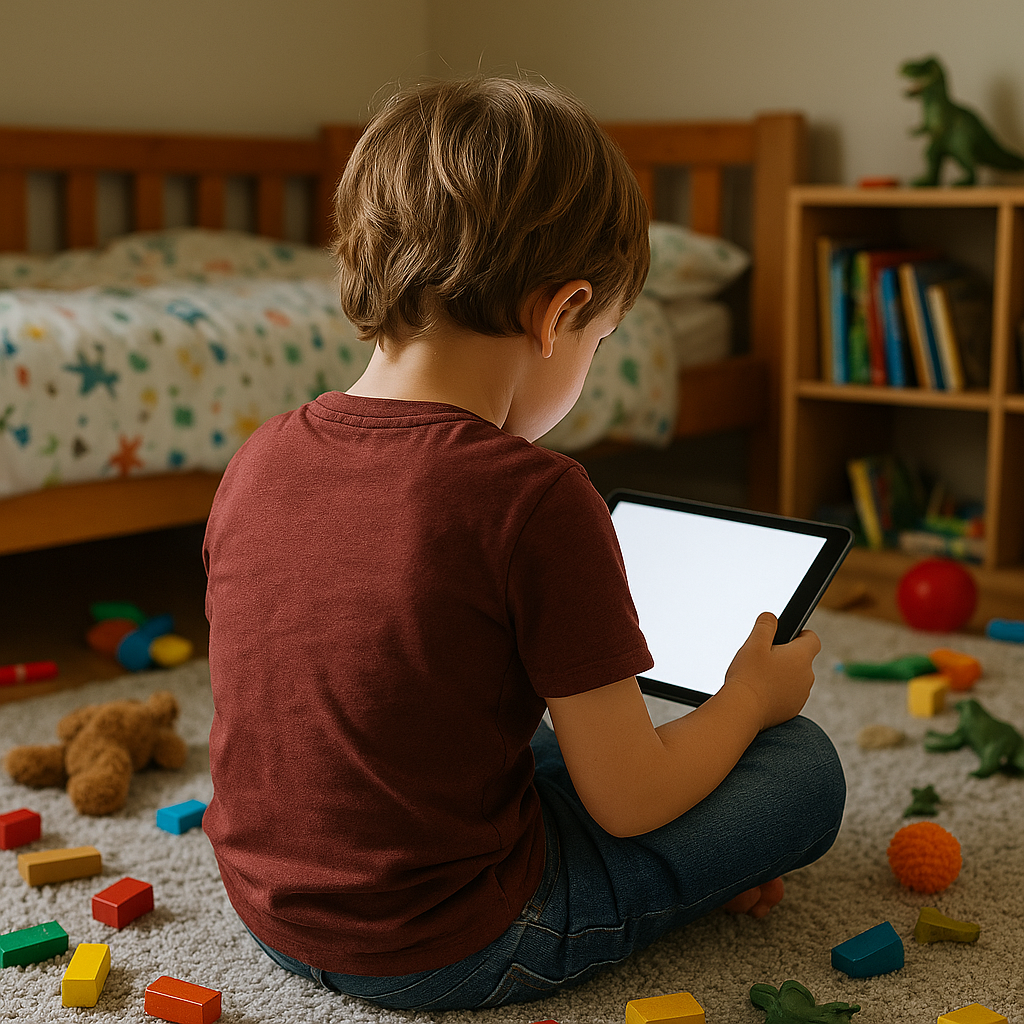
"Just half an hour more, Mom!" – Does that sound familiar? What sounds harmless is revealed in studies to be a disturbing trend: children are spending more and more time with tablets. And this does not remain without consequences.
I see this with my little one too. Although we only watch 10 minutes of Peppa Pig per day, mainly to encourage her English early on, even after that she is reluctant to give back the smartphone.
According to a current study reported by Merkur.de, intensive tablet use can lead to more anger, frustration, and attention problems in children. Even 20 minutes are enough to trigger these effects. Children become more impulsive, react more irritably – especially when the tablet is taken away from them.
In parallel, the MINIKIM study shows that one in five toddlers in Germany already owns their own tablet. Development is progressing faster than many parents can keep up with – and presents families with new challenges.
Screen time is a reality – but we need alternatives
Digital media are part of our children's lives today. This does not mean that they should be available around the clock. On the contrary: children need spaces without screens – not as a step backward, but as a counterbalance.
This is exactly where Ohrlaf comes in.
Ohrlaf: More than a toy – a learning companion
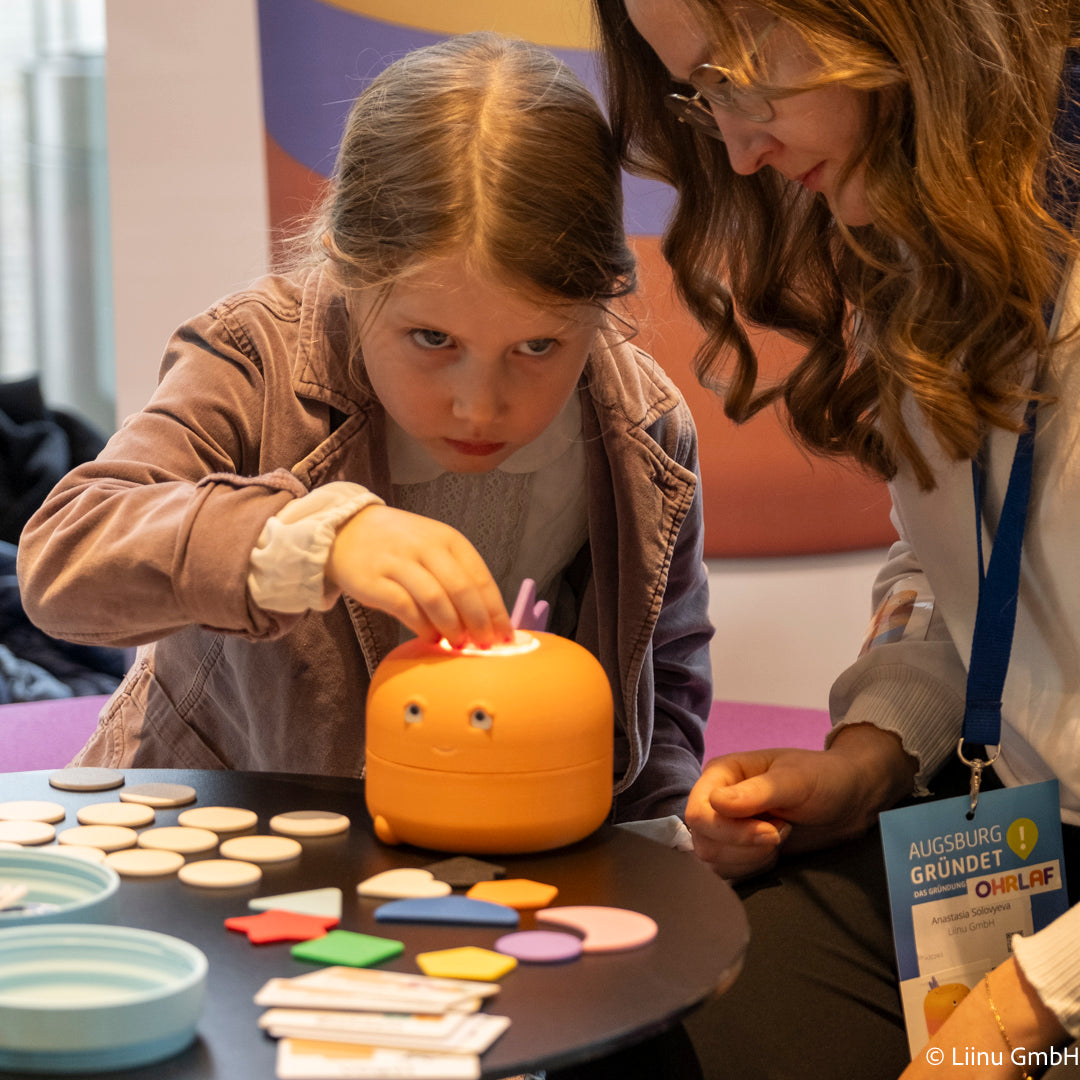
Ohrlaf is an interactive, screen-free edutainment system for children aged 3 and up. Instead of colorful pictures and endless scrolling, Ohrlaf invites children to think with their ears, discover stories, recognize sounds, solve tasks – all haptically and audibly.
With a starter pack and expansion sets, Ohrlaf grows with them – and turns learning into an adventure.
Children need guidance, not distraction
Of course, children need to learn how to deal with digital media. But that should not mean that they have to learn to control their anger about "tablet withdrawal" in preschool.
It is much better to create an environment for them where they can be curious, make mistakes, and learn playfully – without overstimulation from screens.
Conclusion: Less screen, more connection
Ohrlaf doesn't replace the tablet – it complements it. It creates moments of calm and concentration. And shows that learning also works differently – namely playfully, meaningfully, and without tantrums.


1 comment
Guido
„Nur ein paar Minuten noch, Papa!“ – Und ich entdecke bei meiner 10-Jährigen Tochter Symptome, die normalerweise auf Burnout BEI ERWACHSENEN hindeuten:
https://www.muenchen-klinik.de/psyche-seele-psychische-erkrankungen/burnout/burnout-test/
https://wellness.doktorabc.com/de/gesundheit/vorburnout-warum-ihr-wochenende-sie-nicht-mehr-erholt/
Euer Konzept ist toll. Vor allem macht es sicherlich einen Unterschied, Dinge anfassen zu können.
Leave a comment
This site is protected by hCaptcha and the hCaptcha Privacy Policy and Terms of Service apply.